
EPABX vs IP PBX: What Indian Offices Should Buy in 2026
Compare EPABX and IP PBX systems for Indian workplaces. Review cabling, calling costs, and features to pick the best office phone setup in 2026.
Indian workplaces are moving away from wall-mounted intercoms and copper cables because old wiring often breaks and limits modern communication.
An IP PBX is the clear future of business calling in India. It eliminates expensive cable maintenance, lowers phone bills, and gives teams modern digital features that analog systems cannot match.
Let’s understand EPABX vs. IP PBX in more detail.
What is the Difference Between EPABX and IP PBX
Here’s how EPABX and IP PBX differ across key areas such as cabling, audio quality, mobility, and scalability.
| Feature | EPABX | IP PBX |
|---|---|---|
| Technology | Analog | Digital/IP-based |
| Cabling Needs | Requires dedicated telephone lines | Uses the existing office network |
| Audio Clarity | May have noise, buzz, or static | Clear digital audio |
| Team Mobility | Users are tied to physical desks | Calls can be handled on laptops and mobile apps |
| System Growth | Requires new hardware and wiring | Extensions can be added through software |
| Flexibility | Limited | More flexible for modern workplaces |
While traditional EPABX limits your team to fixed desks and delicate physical lines, an IP PBX transforms your business phone setup into a flexible digital tool that grows seamlessly with your office.
Why Traditional EPABX Systems are Outdated
Traditional copper intercoms create ongoing problems for Indian businesses that rely on fast, dependable communication.
Frequent Cabling Issues
Packed cable shafts, damp walls, and rodent damage in Indian commercial complexes frequently damage old copper lines. Tracking down a cut wire inside a wall trunking box wastes valuable technician time and leaves your office without phone service.
No Remote or Hybrid Support
Analog intercoms trap employees at physical desks. Field sales teams, site managers, and hybrid staff cannot access office lines, causing missed customer calls and delayed follow-ups.
Missing Essential Modern Features
Legacy hardware lacks native call recording, professional IVR greeting menus, and direct CRM integration. Adding these capabilities to an old switchboard requires costly, unreliable external boxes that clutter your office server rack.
How IP PBX Works with Indian Telecom Networks
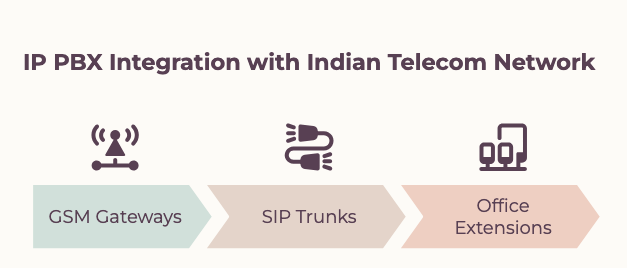
Setting up an IP PBX connects smoothly with India's local telecom options without requiring separate telephone wiring.
- GSM Gateways for Cheap Calling: You can insert standard 4G or 5G business SIM cards from Jio or Airtel into a local gateway device. Your team makes outbound calls using simple unlimited corporate plans instead of paying high landline tariffs.
- SIP Trunks for Heavy Call Traffic: Growing businesses can route virtual phone channels from carriers like Airtel, Tata Tele, or Jio over standard internet lines. This eliminates bulky PRI cables and lets you add lines without physical visits from technicians.
- Extensions on Office LAN and Wi-Fi: Desk phones plug directly into existing computer network ports. Employees can also install softphone apps on their laptops or smartphones, letting them use the office intercom anywhere on the local Wi-Fi.
Cost Comparison for Indian Businesses
Evaluating a business phone system requires looking at immediate rollout expenses and ongoing operational bills.
Upfront Setup Costs
A traditional EPABX demands laying separate copper telephone cables to every desk, which increases labor and material costs. An IP PBX runs over your existing office LAN and Wi-Fi networks, using standard Ethernet switches you already own to eliminate duplicate wiring.
Monthly Calling Expenses
Old intercom boxes connect to standard landlines or fixed PRI circuits that charge high recurring rental fees and metered call rates. An IP PBX cuts monthly telecom bills by connecting to shared mobile CUG plans through GSM gateways or cost-effective digital SIP trunks.
Platforms like Wivox eliminate recurring per-seat software fees by offeringper-server licensingwith unlimited users, keeping your monthly software expenses at zero.
Maintenance and Expansion
Traditional systems require frequent hardware visits to fix broken copper lines, buy proprietary expansion cards, and renew annual maintenance contracts. An IP PBX lets your IT team add new extensions, adjust call routes, and scale capacity directly through a web browser without hardware changes.
Which Phone System Should Your Office Buy?
Legacy EPABX only suits basic setups like small residential societies or budget lodges that need simple room dialing without internet features or call recording.
Growing offices, clinics, and support teams require an IP PBX. It brings essential tools like automated call recording, IVR menus, and mobile softphone apps over existing office Wi-Fi and cheap SIM gateways.
Analog systems belong to the past. An on-premise IP PBX cuts bills and gives you full control of your call data. Explore howWivoxdelivers modern call routing and unlimited extensions with zero monthly fees.
What Is SIP Trunking