
10 Best 3CX Alternatives in 2026 (Self-Hosted & Cloud)
Compare the best 3CX alternatives in 2026. Explore top self-hosted and cloud PBX competitors to choose the right business phone system.
3CX was once a popular IP PBX for growing businesses, but recent changes have led many teams to look for alternatives.
Frequent licensing changes, call limits, and stricter partner policies have made 3CX harder to plan and budget for.
Businesses now want more flexibility. Some prefer full control over call recordings and local hardware, while others want the ease of cloud-based phone systems.
Here are the best 3CX alternatives, covering both self-hosted systems for more control and cloud platforms for easy management.
Why Look for 3CX Alternatives
Many businesses originally chose 3CX for its balance of features and cost. However, recent policy, licensing, and partner rule changes have made teams rethink their setup. Here are the key reasons companies are moving away from 3CX today:
- Strict call and user limits: Simultaneous call caps can cause dropped calls during traffic spikes, and strict extension limits force teams to overpay for higher tiers.
- Higher renewal costs: Smaller tiers have been reduced or phased out, and jumping to higher capacity brings steep price increases each year.
- Complex partner requirements: Buying licenses or finding support often requires going through certified resellers, adding middleman delays and markups.
- Data privacy concerns: Third-party cloud hosting makes compliance difficult for teams that must keep all call recordings and logs on private servers.
These friction points have made dedicated self-hosted and modern cloud alternatives a better fit for many growing teams.
Comparison of the Top 3CX Competitors
Choosing the right phone system depends on how much control you want over your server and how your team prefers to pay.
Self-hosted platforms give you total data ownership with fixed software costs, while cloud services handle all maintenance in exchange for recurring monthly per-user fees.
| Provider | Deployment Type | Pricing Model | Best Fit |
|---|---|---|---|
| Wivox | Self-hosted (On-premises or private cloud) | One-time server license | SMBs, hotels, and clinics wanting zero monthly fees |
| RingCentral (RingEX) | Fully managed cloud | Monthly per-user subscription | Large enterprises needing deep CRM integrations and 99.999% uptime |
| Dialpad | Fully managed cloud | Monthly per-user subscription | Teams wanting real-time AI transcription and live coaching |
| Nextiva | Fully managed cloud | Monthly per-user subscription | Growing businesses seeking dependable voice with strong 24/7 support |
| Aircall | Fully managed cloud | Monthly per-user subscription | Sales and support teams needing fast CRM integrations and call workflows |
| Zoom Phone | Fully managed cloud | Monthly per-user subscription | Budget-conscious teams consolidating video meetings and voice into one app |
| Microsoft Teams Phone | Fully managed cloud | Monthly per-user add-on | Organizations using Microsoft 365 as their primary collaboration workspace |
| CloudTalk | Fully managed cloud | Monthly per-user subscription | Inbound and outbound call centers needing smart dialers and queue analytics |
| JustCall | Fully managed cloud | Monthly per-user subscription | Sales prospecting teams using multi-channel outreach and power dialers |
| Yeastar | Self-hosted software or local appliance | Hardware purchase or annual software plan | IT admins wanting a dedicated PBX experience that feels familiar to 3CX |
This overview highlights the core difference between self-hosted server ownership and recurring cloud subscriptions.
10 Best Self-Hosted 3CX Alternatives
For full control of your phone system and call data, choose self-hosted software. It runs on your hardware or private cloud without per-seat fees.
1. Wivox
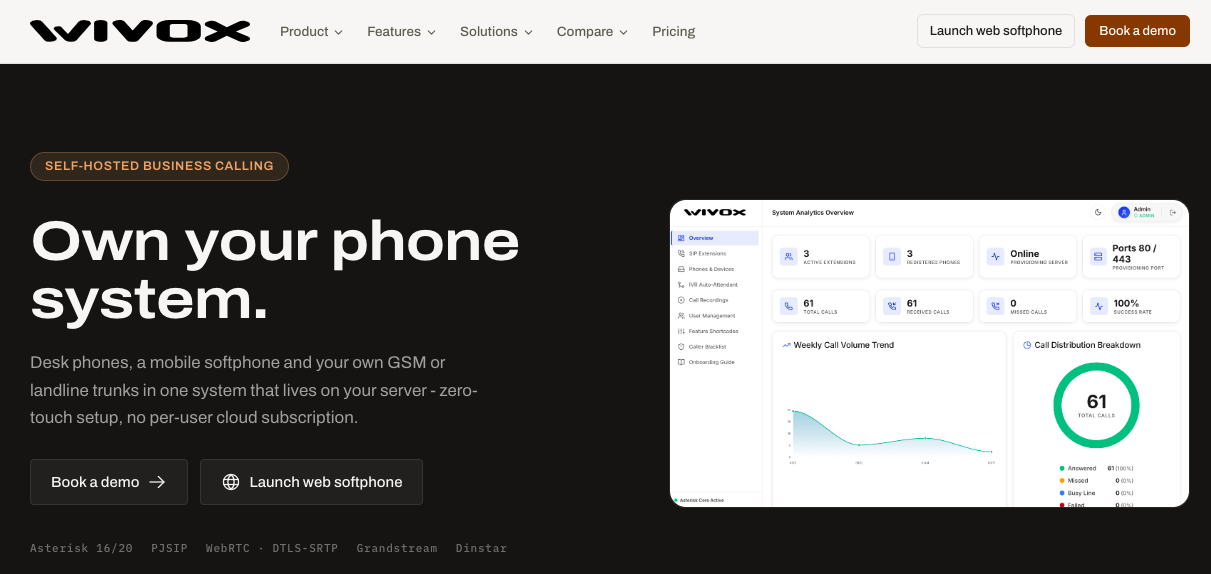
Wivoxis a self-hosted business phone system built on Asterisk and WebRTC. It runs on your own server and features browser softphones, iOS and Android apps, zero-touch setup for Grandstream desk phones, and direct support for Dinstar GSM gateways to run calls over local SIM cards.
You pay a one-time server license with no monthly per-user fees, keeping all call recordings completely private. For a head-to-head feature breakdown, check out this detailedWivox vs 3CX comparison. It includes a visual web-based control panel, automatic call logging, and multi-level IVRs directly out of the box.
Pricing:
- Office (up to 32 extensions): ₹49,000 one-time
- Business (up to 128 extensions): ₹99,000 one-time
- Campus (up to 500 extensions): ₹1,79,000 one-time
- Optional AMC after Year 1: ₹8,000 to ₹28,000 per year
2. RingCentral (RingEX)
RingCentralis built for large-scale enterprise communication, offering high reliability, global coverage, and advanced AI call summaries. The platform includes local numbers in over 100 countries, automated call notes, and native integrations with over 300 tools like Salesforce and Microsoft 365.
Its high uptime standard and large integration library make it dependable for global teams. However, recurring monthly per-user fees grow expensive quickly, and the interface carries a steep learning curve for basic setups.
3. Dialpad
Dialpadfocuses on AI-driven real-time agent coaching, speech analytics, and automated transcription. Its core engine provides live speech-to-text transcriptions, customer sentiment tracking, and post-call summaries sent straight to your email across desktop and mobile apps.
It includes built-in AI transcription directly in its standard plans without extra fees. On the downside, monthly seat costs compound as teams expand, and the system favors softphones over physical desk phones.
4. Nextiva
Nextivais designed for growing small-to-midsize businesses needing dependable uptime and strong customer support. It pairs standard business calling with customer interaction tracking, visual call flow management, and multi-channel team chat.
The platform offers responsive 24/7 support and proven network reliability. However, several advanced call routing tools require top tiers, and securing the lowest advertised rates often requires multi-year contracts.
5. Aircall
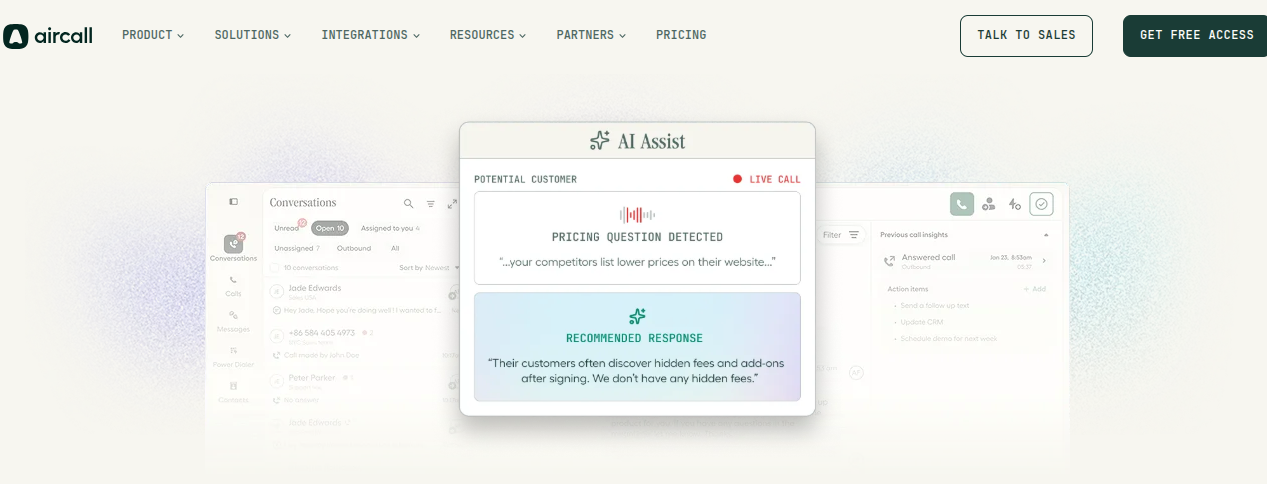
Aircallis tailored for sales and support teams requiring fast CRM integrations and simple team workflows. It features shared call inboxes, an outbound power dialer, live call monitoring, and one-click sync with HubSpot, Salesforce, and Zendesk.
Setup takes only minutes, and call logging into your CRM happens automatically. The drawbacks are the mandatory three-seat minimum, costly AI add-ons, and a product design that does not cater to physical office desk phones.
6. Zoom Phone
Zoom Phoneis ideal for budget-conscious teams looking to consolidate video meetings and cloud telephony into one app. It lets users turn voice calls into Zoom video meetings with one click and manages desk phones and softphones inside the standard Zoom dashboard.
It provides an intuitive interface that staff already understand and lower starting rates than legacy telecom providers. However, monthly subscriptions continue indefinitely, lower tiers charge for outgoing minutes, and all call data remains on Zoom servers.
7. Microsoft Teams Phone
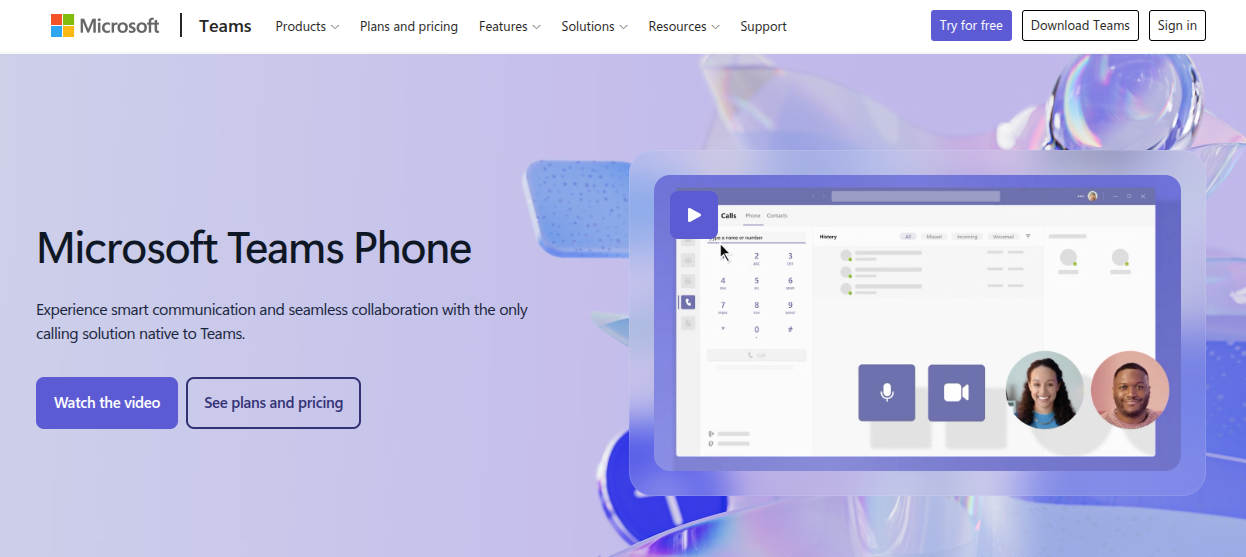
Microsoft Teams Phonefits organizations already utilizing Microsoft 365 as their main collaboration hub. It places a dial pad directly inside the Teams app, supporting cloud auto-attendants, call queues, and external SIP lines through Operator Connect or Direct Routing.
Its main appeal is centralizing calling inside existing Teams workflows without extra apps. The trade-offs are higher overall costs due to mandatory Microsoft 365 base licenses, complex backend management, and basic call routing options.
8. CloudTalk
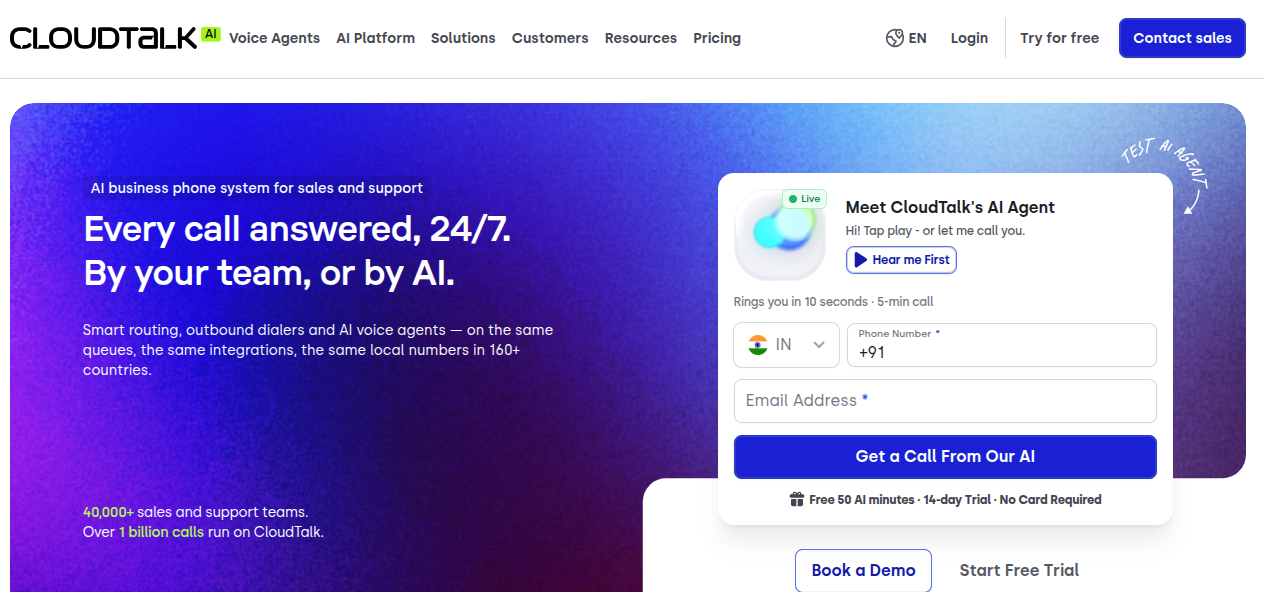
CloudTalkserves inbound and outbound call centers needing advanced smart dialers and queue analytics. It offers skill-based call routing, automated power dialers, performance wallboards, and phone numbers in over 160 countries.
The software noticeably speeds up outbound agent outreach and provides detailed live queue analytics. On the other hand, monthly per-agent costs make it impractical for non-sales staff, and external call minutes can trigger additional usage bills.
9. JustCall
JustCallis engineered for dedicated sales prospecting teams that rely heavily on multi-channel communication and power dialers. It combines multi-line auto dialers, business SMS campaigns, live conversation coaching, and deep syncing with modern sales CRMs.
It excels at combining outbound calling with text messaging in a single workflow. However, the two-seat minimum limits single users, top AI tiers are costly, and it lacks the general front-desk routing features needed by schools or clinics.
10. Yeastar
Yeastaris built for IT administrators who want a hardware or software PBX experience that feels familiar to 3CX. It provides web, mobile, and desktop apps alongside visual dial plans, call queue management, and support for on-premises servers, virtual machines, or local hardware boxes.
It delivers genuine PBX architecture and an easy remote access service that avoids complex router configurations. The downside is that advanced call center tools and mobile softphone features require recurring annual plans, which increase total ownership costs over time.
How to Choose the Right Business Phone System
Choosing the right phone system depends on your privacy rules, current hardware, budget structure, and internal technical skill.
Here are four key factors to consider:
- Self-hosted servers vs cloud SaaS subscriptions: Self-hosted setups run on your private hardware to keep call recordings fully private. Cloud platforms handle updates for you, but your voice traffic passes through third-party data centers.
- Hardware desk phones vs softphone apps: High-traffic offices, schools, and clinics need physical IP phones and intercoms set up through hardware auto-provisioning. Distributed sales and support teams usually prefer lightweight softphones on laptops and mobile devices.
- One-time license costs vs monthly per-user fees: Cloud subscriptions charge $15 to $50 per seat every month. Platforms with a per-service pricing model eliminate recurring per-user fees no matter how many internal extensions you add.
- Technical skill required for daily management: Unmanaged open-source PBXs require advanced Linux skills to maintain safely. Teams without dedicated IT staff should choose a self-hosted platform with a simple web dashboard or a fully managed cloud service.
Which is the Best 3CX Alternative?
Choosing the right business phone system depends on your priorities. Cloud platforms are easy to manage, while self-hosted systems give you more control over your infrastructure, data, and ongoing costs.
For businesses that want full data privacy without recurring per-user fees, Wivox is a strong 3CX alternative. Its one-time server license lets you keep calls on private hardware, while GSM gateway support allows you to route calls through local SIM cards and reduce calling costs.
Want to see how Wivox works?Book a live demoto test the platform, check call quality, and explore a more flexible alternative to 3CX.
Exotel vs MyOperator vs Self-Hosted PBX: Which Fi…